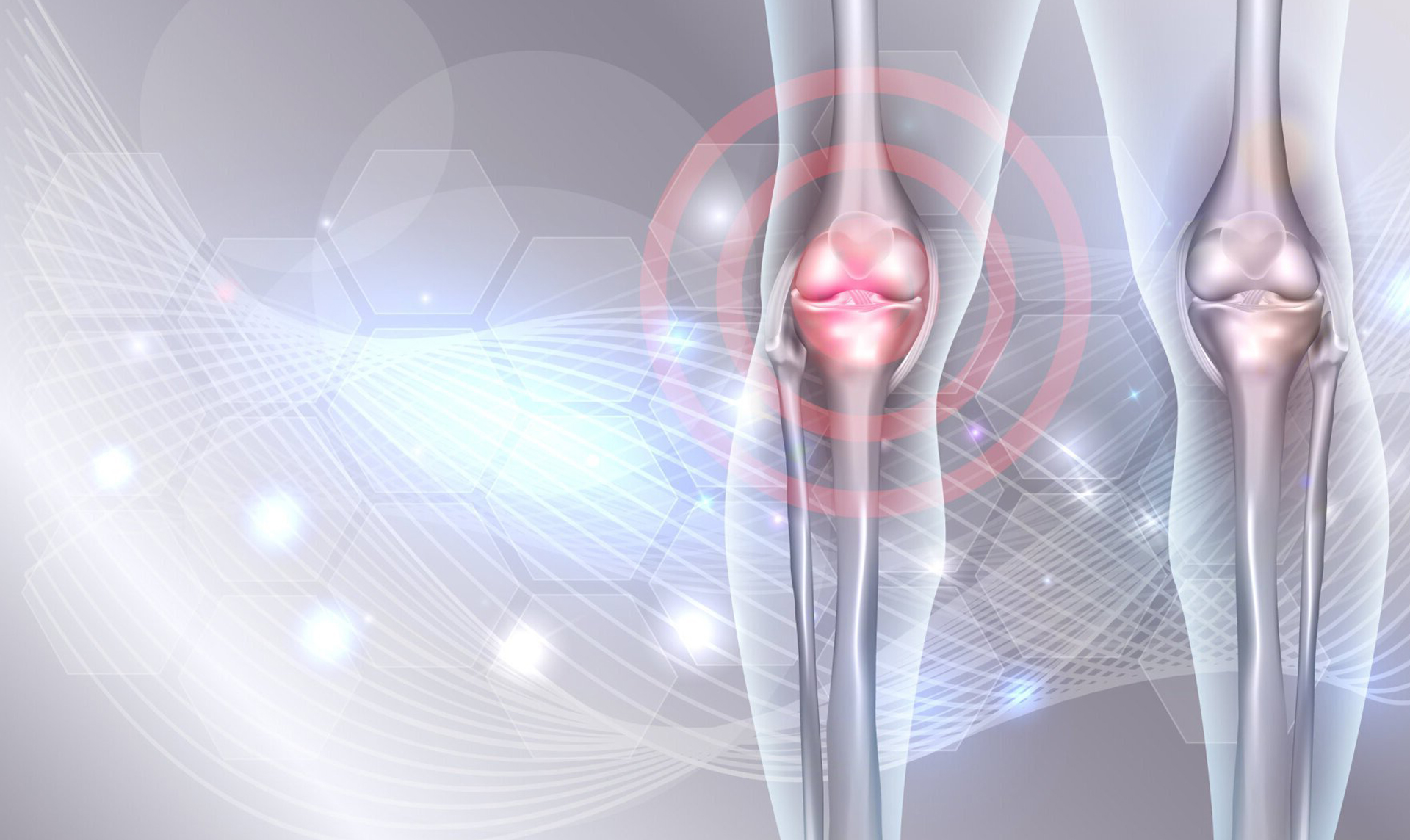
Does the pain come from one knee and keep hurting in the same spot, rather than all over the knee? Yet at the same time, you are still able to walk, bend, and subject it to load without the knee feeling completely worn out or unstable.
Although much of the knee still works as it always has, the discomfort doesn’t fully go away. When this keeps happening, it’s often linked to wear from arthritis affecting one part of the knee rather than the knee as a whole. At this juncture, the question becomes how much of the knee truly needs treatment.
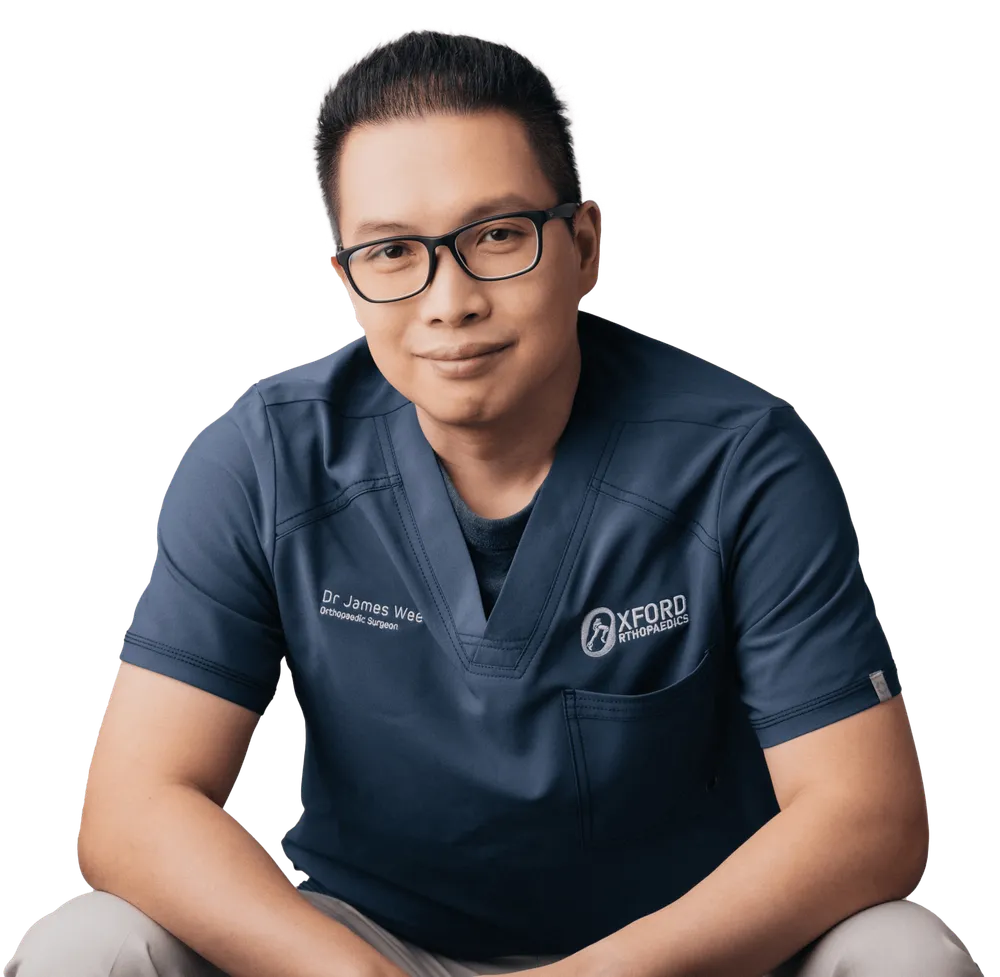
About Dr James Wee
Experience That Guides the Decision
When knee pain affects only one part of the joint, the decision is no longer just about treatment. It becomes a question of how much of the knee should be treated, and whether the preservation of healthy structures is possible. Prioritising this preservation is key, as keeping your natural bone and ligaments allows for a more natural-feeling knee and a faster return to daily activities.
Decisions of this nature require seasoned clinical judgement. At Oxford Orthopaedics, Dr James Wee is a dual-subspeciality Senior Consultant with more than 20 years of clinical experience managing complex conditions. This expertise is grounded in a foundation of rigorous training:
Academic Excellence:Graduated from the National University of Singapore in 2005 on the Dean’s List with the Ivan Polunin Gold Medal.
SpecialistQualifications:Completedpostgraduatespecialisttrainingandobtainedhis Fellowship of the Royal College of Surgeons of Edinburgh in 2015.
Advanced UK Fellowships:Awarded a scholarship for clinical fellowships in Hip and Knee Surgery at Oxford University Hospitals and Foot and Ankle Surgery at the Royal National Orthopaedic Hospital.
This depth of training allows Dr Wee to pinpoint the exact source of symptoms with precision. This is essential when weighing partial and total knee replacement options against your unique alignment, stability, and imaging findings.
Such a thorough assessment is particularly helpful for those navigating complex surgical choices and seeking a detailed perspective on joint preservation. By identifying the specific cause of your symptoms, Dr Wee provides the clarity and confidence needed to decide on the most appropriate path forward.
HereatOxfordOrthopaedics,PartialKneeReplacement(PKR)orUnicompartmentalKnee Arthroplasty (UKA) is performed using the Oxford Partial Knee System, a surgical method designed for knees where damage is limited to a specific part of the joint. Instead of replacing the entire knee, the procedure targets only the damaged area, leaving the healthy bone and ligaments untouched.
Since this surgery keeps your natural ligaments to guide how the knee bends, the new components must be perfectly balanced so the joint doesn’t feel too tight or too loose. To ensure this critical standard is met, Dr James Wee trained in the United Kingdom directly with the inventor surgeons of the Oxford Partial Knee System. This firsthand training provides the foundation for applying the exact techniques developed by the procedure’s creators, where the implant is positioned in a manner that works in sync with the natural movement of your leg.
Fittingtheimplant with such precision allows thehealthyportions of thekneeto remain undisturbed. By keeping the original ligaments and bone intact, the joint maintains its natural coordination. This is why many patients describe the knee as feeling more familiar after surgery, rather than feeling like an entirely new joint.
For suitable patients, this approach differs from a Total Knee Replacement (TKR) in a few important ways:
Reduced Postoperative Discomfort –Because the surgery is focused only on the damaged area, there is significantly less trauma to the surrounding tissue. This generally results in a more comfortable initial healing phase compared to a full replacement.
Streamlined Recovery– Targeting a specific compartment will result in less soft tissue disturbance.Withlessofthejointdisrupted,rehabilitationistypicallymore straightforward and easier for patients to manage.
Preservation of Healthy Tissue– By avoiding an “all-or-nothing” approach, healthy bone and cartilage are left undisturbed. This maintains the natural foundation of the leg rather than replacing it with a full mechanical substitute.
A More Natural Feeling– The Oxford method uses a “mobile bearing” design. This allows the joint to move in a way that closely reflects natural knee motion, helping the knee feel less like an artificial part and more like your own joint.
Differences Between Partial and Total Knee Replacement
The choice between a partial or a total knee replacement procedure depends on how much of the knee is damaged rather than the level of pain alone. PKR/UKA is a targeted option used when arthritis is limited to one specific part of the joint. In contrast, a TKR is generally reserved for end-stage cases where damage has spread throughout the knee, causing severe difficulty with daily activities and mobility.
PKR/UKA
TKR
Surgical Scope
Replaces only the compartment affected by arthritis.
Replaces all three compartments of the knee.
Preservation
Typically preserves the side (lateral) and front (patellofemoral) of the knee.
Removes the medial, lateral, and patellofemoral compartments.
Recovery
Generally shorter with fewer complications.
Longer with more potential complications.
Natural Feel
Offers more natural sensation and movement of the joint.
Might feel less natural due to the invasive nature of the surgery.
This approach ensures you don’t undergo a TKR procedure if your problem can be solved by a more focused, conservative treatment. By matching the surgery to your specific needs, we can fix the source of your pain while saving the healthy parts of your knee that are still working well.
Navigating the administrative side of healthcare can be complex, so our dedicated team aims to simplify this process, allowing you to focus on your recovery. Oxford Orthopaedics works closely with insurers throughout the claims and billing stages to help facilitate a smoother, more comfortable experience.
Because your coverage depends on your specific policy, we provide hands-on assistance for those under Integrated Shield plans (with private hospital riders) or Corporate Insurance plans. This includes helping you apply for a Letter of Guarantee (LOG) or a Pre-authorisation certificate, as well as working directly with surgical centres to help process medical claims on your behalf.
Intergrated Shield
Corporate Insurance
Book Your Appointment
Determining whether a PKR/UKA procedure is the right option for you starts with a thorough evaluation of your knee’s current condition. The aim is to identify the exact extent of joint damage while preserving as much healthy bone and ligaments as possible.
As part of this assessment, imaging and clinical findings are reviewed to confirm whether symptoms are coming from a single compartment of the knee. This allows a recommendation to be made with long-term mobility and a more natural-feeling joint in mind, rather than a one-size-fits-all approach.
Complete the form to arrange a consultation with Dr James Wee today.